

How To Draw The Kukui Tree
| Candlenut | |
|---|---|
 | |
| Candlenut foliage, flowers, and nut | |
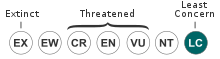
| Conservation status | |
| | |
Scientific classification  | |
| Kingdom: | Plantae |
| Clade: | Tracheophytes |
| Clade: | Angiosperms |
| Clade: | Eudicots |
| Clade: | Rosids |
| Lodge: | Malpighiales |
| Family: | Euphorbiaceae |
| Genus: | Aleurites |
| Species: | A. moluccanus |
| Binomial name | |
| Aleurites moluccanus (L.) Willd.[2] | |
| Synonyms | |
| Aleurites javanicus Gand. | |
Aleurites moluccanus , the candlenut, is a flowering tree in the spurge family, Euphorbiaceae, also known as candleberry, Indian walnut, kemiri , varnish tree, nuez de la Republic of india , buah keras , godou , kukui nut tree, and rata kekuna .
Description [edit]
The candlenut grows to a superlative of up to 30 thou (98 ft), with wide spreading or pendulous branches. The leaves are stake green, simple, and ovate or heart-shaped on mature shoots, just may exist 3-, five-, or seven-lobed on saplings.[5] They are up to twenty cm (7.ix in) long and 13 cm (5.1 in) wide and immature leaves are densely clothed in rusty or cream stellate hairs. Petioles measure upwardly to 12.5 cm (4.9 in) long and stipules most 5 mm (0.20 in).[6]
Flowers are pocket-size—male person flowers measure out around 5 mm (0.twenty in) in diameter, female flowers near 9 mm (0.35 in).[6]
The fruit is a drupe about 4–6 cm (1.6–2.4 in) in diameter with one or two lobes; each lobe has a single soft, white, oily, kernel contained inside a hard crush which is about ii cm (0.79 in) in diameter.[v] The kernel is the source of Candlenut oil.[7]
Taxonomy [edit]
This plant was starting time described by Carl Linnaeus in his piece of work Species Plantarum (Sp. Pl. 2: 1006 (1753)) in 1753 as Jatropha moluccana.[8] It was renamed as Aleurites moluccana in 1805 past Carl Ludwig Willdenow in a later edition of Species Plantarum (Sp. Pl. 4: 590 (1805)),[iii] but has since been renamed every bit Aleurites moluccanus.
Notation [edit]
While there are many online references to the name "Aleurites moluccana", this is non a proper noun that is accepted by botanic authourities such as the International Plant Names Index (IPNI) or the Germplasm Resource Information Network (Grinning).
Etymology [edit]
The genus name derives from the Ancient Greek ἄλευρον (áleuron), significant "flour" or "meal", and refers to the new growth which appears to be dusted with flour. The species epithet means "from the Moluccas".[v]
Distribution and habitat [edit]
Distribution [edit]
Its native range is impossible to establish precisely considering of early spread past humans, and the tree is now distributed throughout the New and Onetime World tropics.
The candlenut was first domesticated on the islands of Southeast Asia. Remains of harvested candlenuts have been recovered from archaeological sites in Timor and Morotai in eastern Indonesia, dated to effectually 13,000 and 11,000 BP, respectively.[9] Archaeological evidence of candlenut cultivation is besides establish in Neolithic sites of the Toalean culture in southern Sulawesi dated to around iii,700 to 2,300 BP.[x] [11] Candlenuts were widely introduced into the Pacific islands by early Austronesian voyagers and became naturalized to loftier volcanic islands.[12] [13] [14]
Habitat [edit]
A. moluccanus grows in tropical rainforests and gallery forests. Information technology is a very fast-growing tree and oftentimes appears in disturbed rainforest. In Australia the altitudinal range is from sea level to 800 m (2,600 ft).[6]
Environmental [edit]
In Australia the seeds are eaten past rodents, in item the Giant white-tailed rat. The cleaved shells of the fruits are often institute underneath the copse.[6]
The larvae of the coleopteran Agrianome fairmairei feed on dead candlenut wood,[15] and are considered a effeminateness in New Caledonia.[16]
Names [edit]
The Proto-Austronesian give-and-take for candlenut is reconstructed as *kamiri, with modernistic cognates including Hanunó'o, Iban, and Sundanese muncang; Javanese and Malay kemiri;[17] and Tetun kamii, but the Oceanian words for candlenut is believed to be derived, instead, from Proto-Austronesian *CuSuR which became Proto-Malayo-Polynesian *tuhuR, originally meaning "cord together, as beads", referring to the structure of the candlenut torches. It became Proto-Eastern-Malayo-Polynesian and Proto-Oceanic *tuRi which is then reduplicated. Mod cognates including Fijian, Tongan, Rarotongan, and Niue tui-tui; and Hawaiian kui-kui or kukui.[xviii]
The Malay language in both has some other name given to the nut which is buah keras (literally "hard fruit").[nineteen] [20]
Uses [edit]

Women in Democratic republic of timor-leste are preparing candlenut sticks to illuminate a local festival
Both the nut and the oil that tin can be extracted from it are used. While mildly toxic when raw,[21] the nut is appreciated in many cultures once cooked or toasted. In Indonesian and Malaysian cuisine, it is normally used in curries,[20] and on the Indonesian isle of Java, it is used to brand a thick sauce that is eaten with vegetables and rice.[22]
In the Philippines, the fruit and tree are traditionally known as lumbang,[23] later on which Lumban, a lakeshore boondocks in Laguna province, is named. Before the intrusion of not-native species, information technology was oft used equally a property-line manager, because its silvery underleaf makes the tree easy to distinguish from a altitude.[24]
In the land of Sabah, Malaysian Borneo, the Dusun tribes telephone call the fruit as godou and are used in tattoo-making as an optional ingredient for the ink.[25]
A Hawaiian condiment known as ʻinamona is made from roasted kukui (candlenuts) mixed into a paste with common salt. ʻInamona is a primal ingredient in traditional Hawaiian poke.[26]
In aboriginal Hawaiʻi, kukui nuts were burned to provide lite. The nuts were strung in a row on a palm leaf midrib, lit on ane end, and burned one past ane every fifteen minutes or and then. This led to their use equally a measure of time. Hawaiians extracted the oil from the nut and burned it in a rock oil lamp called a kukui hele po (lite, darkness goes) with a wick made of kapa material.[27]
Hawaiians had many other uses for the tree, including leis from the shells, leaves, and flowers; ink for tattoos from charred nuts; a varnish with the oil; and fishermen would chew the nuts and spit them on the water to break the surface tension and remove reflections, giving them greater underwater visibility. A red-brownish dye made from the inner bark was used on kapa and aho (Touchardia latifolia cordage). A blanket of kukui oil helped preserve ʻupena (line-fishing nets).[27] The nohona waʻa (seats), pale (gunwales) of waʻa (outrigger canoes) were made from the wood.[28] The body was sometimes used to make smaller canoes used for angling.[29] Kukui was named the state tree of Hawaii on i May 1959[thirty] due to its multitude of uses.[31] It as well represents the isle of Molokaʻi, whose symbolic color is the silverish green of the kukui leaf.[ citation needed ]
As recently equally 1993 on the outlying islands of the kingdom of Tonga, candlenuts were chewed into sweet-scented emollient used during a traditional funerary ritual. They were used for making various sweet-smelling oils for the skin.[32]
In Australia, Ancient Australians used them for a diversity of similar purposes.[33] [34] [35]
In Uganda, the seed is referred to every bit kabakanjagala, meaning "the male monarch loves me"[36]
In Fiji, this nut is called sikeci and its oil is used in cosmetic products.[37]
Toxicity [edit]
Because the seeds contain saponin and phorbol, they are mildly toxic when raw.[21] However, the kukui seed oil has no known toxicity and is non an irritant, even to the eyes.[38]
Mythology [edit]
In Maui, the kukui is a symbol of enlightenment, protection, and peace.[39] Kamapuaʻa, the sus scrofa-man fertility demigod, was said to be able to transform into a kukui tree.[twoscore] One of the legends told of Kamapuaʻa: ane twenty-four hours, a man vanquish his wife to expiry and buried her beneath Kamapuaʻa while he was in tree course.
Gallery [edit]
-

Flowers
-

Young leaves demonstrating their hairy character
-

Inflorescence
-

Sawn timber, Lombok, Indonesia
-

Woods handicraft made from timber of this species, Lombok, Republic of indonesia
See also [edit]
- Domesticated plants and animals of Austronesia
- Candlenut oil
References [edit]
- ^ Rivers, M.C.; Barstow, M.; Mark, J. (2017). "Aleurites moluccanus". IUCN Cherry-red List of Threatened Species. 2017: east.T18435618A18435622. doi:10.2305/IUCN.U.k..2017-3.RLTS.T18435618A18435622.en . Retrieved 12 November 2022.
- ^ "Aleurites moluccanus". International Constitute Names Index . Retrieved twenty Feb 2022.
- ^ a b von, Linné, Carl; Ludwig, Willdenow, Karl (x September 2022). "Caroli a Linné(1805); Species Plantarum Edn. 4, four(1): 590".
- ^ "Aleurites moluccanus". Germplasm Resources Information Network (Grin). Agricultural Enquiry Service (ARS), Us Department of Agriculture (USDA). Retrieved 2009-11-15 .
- ^ a b c Cooper, Wendy; Cooper, William T. (2004). Fruits of the Australian Tropical Rainforest. Melbourne, Australia: Nokomis Editions. p. 171. ISBN0-9581742-1-0.
- ^ a b c d F.A.Zich; B.P.M.Hyland; T.Whiffen; R.A.Kerrigan (2020). "Aleurites moluccanus". Australian Tropical Rainforest Plants Edition eight (RFK8). Middle for Australian National Biodiversity Enquiry (CANBR), Australian Government. Retrieved vii June 2022.
- ^ Razal, Ramon; Palijon, Armando (2009). Non-Wood Forest Products of the Philippines. Calamba City, Laguna: El Guapo Press Press. p. 67. ISBN978-971-579-058-1.
- ^ "Jatropha moluccana". International Institute Names Index . Retrieved xx Feb 2022.
- ^ Blench, Roger (2004). "Fruits and arboriculture in the Indo-Pacific region". Bulletin of the Indo-Pacific Prehistory Association. 24 (The Taipei Papers (Book 2)): 31–50.
- ^ Simanjuntak, Truman (2006). "Advancement of Research on the Austronesian in Sulawesi". In Simanjuntak, Truman; Hisyam, 1000.; Prasetyo, Bagyo; Nastiti, Titi Surti (eds.). Archeology: Indonesian Perspective : R.P. Soejono'southward Festschrift. Indonesian Plant of Sciences (LIPI). pp. 223–231. ISBN9789792624991.
- ^ Hasanuddin (2018). "Prehistoric sites in Kabupaten Enrekang, South Sulawesi". In O'Connor, Sue; Bulbeck, David; Meyer, Juliet (eds.). The Archaeology of Sulawesi: Current Inquiry on the Pleistocene to the Historic period. terra australis. Vol. 48. ANU Press. pp. 171–189. doi:x.22459/TA48.eleven.2018.11. ISBN9781760462574. S2CID 134786275.
- ^ Larrue, Sébastien; Meyer, Jean-Yves; Chiron, Thomas (2010). "Anthropogenic Vegetation Contributions to Polynesia's Social Heritage: The Legacy of Candlenut Tree (Aleurites moluccana) Forests and Bamboo (Schizostachyum glaucifolium) Groves on the Island of Tahiti". Economical Botany. 64 (4): 329–339. doi:10.1007/s12231-010-9130-3. S2CID 28192073.
- ^ Weisler, Marshall I.; Mendes, Walter P.; Hua, Quan (2015). "A prehistoric quarry/abode site on Moloka'i and a word of an anomalous early on date on the Polynesian introduced candlenut (kukui, Aleurites moluccana)". Periodical of Pacific Archaeology. 6 (1): 37–57.
- ^ Kirch, Patrick V. (1989). "2d Millennium B.C. Arboriculture in Melanesia: Archaeological Evidence from the Mussau Islands". Economic Botany. 43 (2): 225–240. doi:x.1007/bf02859865. S2CID 29664192.
- ^ "Catalogue of Life : Agrianome fairmairei (Montrouzier, 1861)". www.catalogueoflife.org.
- ^ "Fête du ver de bancoul (Evénements > Thèmes locaux)". www.lafoatourisme.nc.
- ^ For comparison:
- "kemiri". Kamus Dewan (quaternary ed.). Dewan Bahasa dan Pustaka Malaysia. 2022.
- "kemiri". Kamus Besar Bahasa Indonesia (3rd ed.). Badan Pengembangan dan Pembinaan Bahasa, Kementerian Pendidikan dan Kebudayaan Republik Indonesia. 2022.
- "kemiri". Kamus Melayu Riau-Indonesia. Balai Bahasa Sumatera Utara Badan Pengembangan dan Pembinaan Bahasa Republik Indonesia. 2022. p. 194.
- "kemiri". Kamus Melayu Sumatera Utara-Indonesia. Balai Bahasa Sumatera Utara Badan Pengembangan dan Pembinaan Bahasa Republik Indonesia. 2022. p. 125.
- ^ Blust, Robert; Trussel, Stephen (2013). "The Austronesian Comparative Dictionary: A Work in Progress". Oceanic Linguistics. 52 (2): 493–523. doi:x.1353/ol.2013.0016. S2CID 146739541.
- ^ * "buah keras". Kamus Dewan (ke-four ed.). Dewan Bahasa dan Pustaka Malaysia. 2022.
- "buah keras". Kamus Melayu Riau-Indonesia. Balai Bahasa Sumatera Utara Badan Pengembangan dan Pembinaan Bahasa Republik Indonesia. 2022. p. 194.
- ^ a b Hean Chooi Ong (2008). Rempah ratus: khasiat makanan & ubatan. Kuala Lumpur: Utusan Publications. pp. 84–85. ISBN9789676121059.
- ^ a b Scott, Susan; Craig Thomas (2000). Poisonous Plants of Paradise: First Aid and Medical Treatment of Injuries from Hawaii'south Plants. University of Hawaii Printing. p. 26. ISBN978-0-8248-2251-iv.
- ^ Lim, T. 1000. (2012), Lim, T. K. (ed.), "Aleurites moluccanus", Edible Medicinal And Not-Medicinal Plants: Book ii, Fruits, Dordrecht: Springer Netherlands, pp. 465–471, doi:x.1007/978-94-007-1764-0_61, ISBN978-94-007-1764-0 , retrieved 2021-04-22
- ^ metscaper (Patrick Gozon) (12 November 2008). "Learning the Trees that Places were Named subsequently". Our Philippine Trees . Retrieved August sixteen, 2022.
- ^ Philippine Native Copse 101: Up Close and Personal. Green Convergence for Safe Food, Healthy Surround and Sustainable Economy. 2022-01-01. p. 337. ISBN9789719546900.
- ^ Lindung, Malinggou (2016) Lahan Mongimpapak Kadazan-Dusun. Kadazan Language Foundation, Sabah (in Kadazan)
- ^ Laudan, Rachel (1996). The Food of Paradise: Exploring Hawaii's Culinary Heritage. University of Hawaii Press. pp. 37–38. ISBN9780824817787 . Retrieved 2017-01-28 .
- ^ a b "Candlenut Tree Provides More Than Lite". Large Island Now. September ix, 2022. Archived from the original on 2022-09-17. Retrieved 2021-05-17 .
- ^ Krauss, Beatrice H. (1993). "Affiliate four: Canoes". Plants in Hawaiian Culture. University of Hawaii Press. pp. 50–51. ISBN9780824812256.
- ^ Dunford, Betty; Lilinoe Andrews; Mikiala Ayau; Liana I. Honda; Julie Stewart Williams (2002). Hawaiians of Old (3 ed.). Bess Printing. p. 122. ISBN978-1-57306-137-7.
- ^ Kepler, Angela Kay (1998). Hawaiian Heritage Plants. University of Hawaii Press. p. 113. ISBN978-0-8248-1994-1.
- ^ Elevitch, Craig R.; Harley I. Manner (Apr 2006). "Aleurites moluccana (kukui)" (PDF). The Traditional Tree Initiative: 10.
- ^ Morrison, R. Bruce and C. Roderick Wilson, eds. (2002) Ethnographic Essays in Cultural Anthropology. Bellmont, CA: Wadsworth. p. 18. ISBN 0-87581-445-X
- ^ "Candlenut tree: Ancient Use of Native Plants". scientific discipline.uniserve.edu.au. Archived from the original on 10 August 2022. Retrieved 27 July 2022.
- ^ "Candle Nut". www.sgapqld.org.au . Retrieved 27 July 2022.
- ^ J. H. Maiden (1889). The useful native plants of Australia : Including Tasmania. Turner and Henderson, Sydney.
- ^ Cultural Impressions Archived 2022-10-06 at the Wayback Machine
- ^ "Native Constitute Network — Reforestation, Nurseries and Genetics Resource". npn.rngr.cyberspace . Retrieved 2021-05-17 .
- ^ Price, Len. Carrier Oils For Aromatherapy And Massage, 4th edition 2008 p 119. ISBN 1-874353-02-6
- ^ Moore, Jason (Jan 2006). "The tree of light". Maui Mag. Archived from the original on 2022-09-fourteen. Retrieved 2021-05-17 .
- ^ Mower, Nancy Alpert (2001). "Kamapuaʻa: A Hawaiian Trickster". In Jeanne Campbell Reesman (ed.). Trickster Lives: Culture and Myth in American Fiction. Academy of Georgia Press. p. 16. ISBN978-0-8203-2277-3.
External links [edit]
- Gozun, Patrick. "Our Philippine Copse".
- "Hawaii Ecosystems at Adventure factsheet".
- "Kukui images". Hawaii Ecosystems at Risk.
- Picayune Jr., Elbert Fifty.; Skolmen, Roger G. (1989). "Kukui, candlenut-tree" (PDF). Usa Wood Service. Archived from the original (PDF) on 2022-05-04. Retrieved 2011-ten-20 .
- Aleurites moluccana (50.) Willd Medicinal Plant Images Database (Schoolhouse of Chinese Medicine, Hong Kong Baptist University) (in Chinese) (in English)
- Dressler, S.; Schmidt, K. & Zizka, One thousand. (2014). "Aleurites moluccana". African plants – a Photo Guide. Frankfurt/Main: Forschungsinstitut Senckenberg.
- Aleurites moluccana usage of name
- Linnaeus 1805 Species Plantarum Volume 4, full text gratuitous download from BHL

Source: https://en.wikipedia.org/wiki/Aleurites_moluccanus
Posted by: holcombworeuthe93.blogspot.com
0 Response to "How To Draw The Kukui Tree"
Post a Comment